cmms cloud base
How Cloud-Based CMMS Improves Maintenance Operations
There are many benefits. Improving efficiency isn't the only goal; lowering costs and getting the most out of your investment (ROI) are also important.
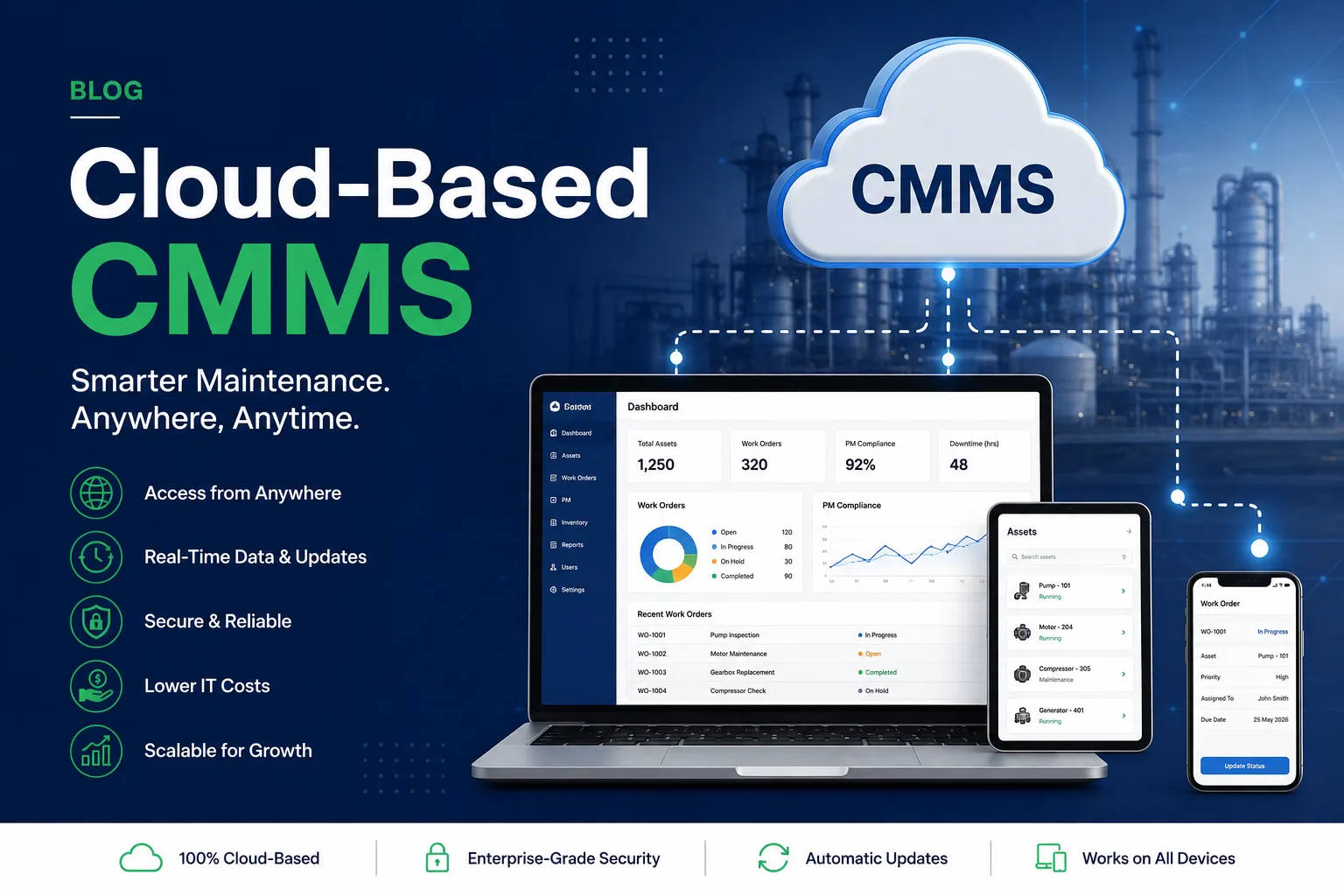
It's important to stay ahead of the competition in today's fast-paced world. Businesses are always looking for new ways to improve productivity and streamline processes. This is what you need: a CMMS (Computerized Maintenance Management System) in the cloud. This powerful tool has transformed how organizations manage their maintenance tasks. Companies can get important data from anywhere at any time by using cloud technology.
Imagine having the ability to monitor equipment performance in real-time or schedule preventive maintenance with just a few clicks. There are many benefits. Improving efficiency isn't the only goal; lowering costs and getting the most out of your investment (ROI) are also important. As we dive deeper into the many advantages of Cloud CMMS, you’ll see why this system is becoming important for businesses aiming for excellence in maintenance operations. Get ready to learn how this amazing piece of technology can change the way you manage maintenance!
Advantages of Cloud-Based CMMS
Cloud-based CMMS gives maintenance teams more freedom than any other type. Because they can access it from any device, your staff can manage tasks from afar, so there is no downtime caused by being in the wrong place.
A big plus is that it can be scaled up or down. It's possible for a cloud CMMS to grow with your business. You’re not limited by physical hardware; you can easily adjust plans and features as needed.
Security is also enhanced in the cloud environment. Leading providers take strong steps to keep data safe from theft or loss. Regularly backing up important data makes sure that it is always safe and can be found again.
Furthermore, automatic updates keep your software current without requiring manual intervention. This means that maintenance teams always have the newest tools and features that are made to make work easier.
Subscription billing models often translate into more predictable expenses compared to traditional systems, making budgeting simpler for organizations of all sizes.
Real-Time Access to Data
Real-time access to data transforms the way maintenance teams operate. With a cloud CMMS, technicians can look at maintenance records and data for how well assets are performing right away from any device. With this instantaneity, there are no gaps like there are with older methods.
Think about a technician who is on-site and can quickly look up old work orders or get alerts when there are problems with equipment. This instant information flow leads to informed decision-making and quick action.
With data-driven insights, companies can plan preventative maintenance ahead of time instead of having to deal with breakdowns after the fact. Companies can not only boost productivity but also greatly reduce downtime across all of their processes by using real-time data.
Increased Efficiency and Productivity
Using a cloud-based CMMS makes maintenance activities much more efficient and productive. Teams can better use their time when processes are organized. Scheduling tasks automatically makes sure that nothing gets missed.
Maintenance workers are told ahead of time about upcoming work orders.This proactive approach cuts down on equipment downtime and stops problems from happening out of the blue.
Technicians can also get the information they need on the go with their mobile devices. They have easy access to all the information they need, whether it's instructions or old data.
This makes things easier to get to, which speeds up decisions and fixes. Teams experience less frustration when they have the tools necessary to do their jobs effectively.
Additionally, by tracking performance metrics in real-time, managers gain insights into workflow bottlenecks. Identifying these obstacles allows for targeted improvements that boost general productivity levels within the company.
Cost Savings and ROI (Return on Investment)
The possibility of big cost savings is one of the main reasons companies are switching to cloud CMMS. By streamlining maintenance operations, companies can reduce downtime and avoid costly repairs.
Cloud-based systems lower the cost of IT infrastructure. You don't need to buy expensive servers or run a lot of software on your own computers.
When you buy a cloud CMMS, you usually get your money back faster because it makes your business more efficient. Tracking the performance of assets helps find equipment that isn't working right, so it can be upgraded or replaced as soon as possible.
Being able to look at data trends also helps with making budget predictions. Accurate insights help people make decisions that are good for their long-term financial health and sustainability.
Improved Collaboration and Communication
Cloud-based CMMS improves collaboration and communication among team members. Everyone can get to important maintenance data from anywhere at any time with a centralized app.
Team members can easily share updates on work orders, asset statuses, and inventory levels. This sharing in real time clears up any confusion and makes sure that everyone is on the same page.
Notifications regarding ongoing tasks or upcoming maintenance schedules keep teams informed. When issues arise, quick responses are possible due to streamlined communication channels.
As a result? Enhanced teamwork leads to faster problem resolution and smoother operations across departments. Every person of the maintenance team knows what they need to do, which leads to better collaboration and a culture of accountability.
Case Studies: Successful Implementation of Cloud-Based CMMS
A factory in Texas switched to a cloud CMMS to make it easier to fix things. Within a few months, they said that equipment downtime had dropped by 30%. Real-time data access allowed technicians to handle issues before they escalated.
In another instance, a facility management company implemented cloud CMMS across multiple locations. They saw better communication between teams and enhanced work order tracking. Because of this, response times were cut down and customer satisfaction went up.
This technology was used by a university for their campus buildings. By transitioning to a cloud-based system, they reduced paperwork significantly. The maintenance staff could now better organize their work, which led to more work getting done overall.
These case studies illustrate the tangible benefits of adopting cloud CMMS solutions across different industries. Improvements were made to each group that were specific to their needs and made operations more reliable and efficient.
Choosing the Right Cloud-Based CMMS for Your Business
Selecting the right Cloud CMMS for your business involves careful consideration of several factors. First, figure out what kind of care you need. Are you managing a single facility or multiple locations?
Next, evaluate user-friendliness. A system that is intuitive can greatly reduce training time and increase adoption rates among staff. Look for dashboards that can be changed to fit the needs of different people in your company.
The ability to integrate is also important. To make things even easier, make sure the CMMS can connect with other software, like ERP systems or inventory management software.
Also, don't forget about customer service. Reliable assistance during implementation and ongoing use is crucial for addressing any issues quickly.
Consider pricing structures and scalability options. To get the most out of your technology investment over the long term, pick an option that fits your budget now and can grow with your business.
Common Concerns and How to Address Them
When businesses switch to a cloud CMMS, they often have worries. A common worry is keeping data safe. A lot of people are afraid that keeping private data online could lead to security breaches.
To fix this, pick a provider with strong encryption and certifications of compliance. Regular audits and updates are crucial for maintaining security.
Another worry is the time it might take to learn how to use new tools. Employees might fight change or feel overwhelmed by new technology.
Offering comprehensive training can ease this transition greatly. Engaging users early in the process fosters acceptance and enthusiasm.
Some companies also question the reliability of cloud systems during outages or internet issues. Selecting reputable vendors with strong uptime guarantees alleviates these worries.
Regularly reviewing contingency plans ensures minimal disruption in operations, regardless of unforeseen challenges people may face during implementation.
Conclusion
Cloud-based CMMS systems are changing how maintenance is done in many different types of businesses. Their ability to give users access to info in real time makes it much easier to make decisions. Teams will be able to handle jobs better, which will make businesses more efficient and productive.
Cost savings become clear when organizations streamline their maintenance activities through these systems. With better asset longevity and less downtime, the return on investment often covers the initial setup costs.
Teams are also able to work together and talk to each other better, which makes processes go more smoothly. The case studies that show how cloud-based CMMS has been successfully implemented show that companies that use this technology see real benefits.
Choosing the right system is crucial for maximizing its potential, and addressing common worries early on helps smoothen the transition. As companies move more into the digital world, using tools like Cloud CMMS is not only becoming more useful, it's basically necessary to stay ahead in today's market.
Keep reading
More from the Mantrix blog

Best MRO Products for Manufacturing, Warehousing, and Facilities
Industrial processes that are safe and run smoothly depend on MRO (Maintenance, Repair, and processes) products. Picking the correct safety gear, lubricants,

FMEA Explained: A Practical Guide to Smarter Risk Management
Organizations can find these risks early with FMEA's help. With FMEA, you don't have to wait for something to go wrong and then rush to fix it.

Root Cause Analysis in Maintenance Management: A Complete Guide
Root Cause Analysis gives maintenance teams the tools to stop reacting and start preventing. Rather than treating the symptom (the broken part),