RCA
Root Cause Analysis in Maintenance Management: A Complete Guide
Root Cause Analysis gives maintenance teams the tools to stop reacting and start preventing. Rather than treating the symptom (the broken part),

If you work in maintenance management, you can use Root Cause Analysis (RCA) to find out why things break down instead of just the symptoms. Maintenance teams can stop failures from happening again, cut down on unexpected downtime, and lower long-term maintenance costs by fixing problems where they start. These days, CMMS systems like Mantrixs include RCA tools right in the maintenance processes.
Equipment breaks down. That's just how things work. When the same machine breaks down three times in two months, though, a quick fix won't work. Nothing is as simple as that.
Root Cause Analysis gives maintenance teams the tools to stop reacting and start preventing. Rather than treating the symptom (the broken part), RCA targets the underlying condition that caused the failure in the first place. As a result? There should be fewer mistakes that happen over and over, better use of resources, and an ongoing maintenance plan that gets better.
If you work in maintenance, this guide has all the information you need about Root Cause Analysis. It goes over the basic methods and how platforms like Mantrixs CMMS can speed up and simplify the process.
What Is Root Cause Analysis in Maintenance Management?
Root Cause Analysis is a systematic process for identifying why equipment or systems fail. The core premise is really simple: every error has a reason, and that reason has a reason. Teams at RCA are told to keep asking questions until they find the problem's source.
In RCA, the difference between symptoms and root reasons is the most important one. One sign is a conveyor belt stopping in the middle of a shift. One root cause is worn bearings that are caused by not lubricating them enough. Treating only the symptom means the failure will return. Getting to the root of the problem breaks the loop.
This approach delivers measurable financial value. According to industry research, unplanned downtime costs manufacturers an estimated $50 billion annually. RCA directly lowers that number by stopping problems before they happen instead of fixing them after the fact.
Common Root Cause Analysis Techniques and Methods
There are pros and cons to each RCA method. Maintenance teams usually decide what to do next based on how complicated the problem is and how much information they have.
The 5 Whys Approach for Systematic Problem-Solving
The 5 Whys method is the one that people use most often. Analysts start with the failure event and ask "why?" times before they figure out what’s wrong. It works well for simple mechanical or process failures, is quick, and doesn't need any special software.
Example:
Why did the pump fail? → It overheated.
Why did it overheat? → The cooling system wasn't working.
Why wasn't the cooling system working? → The filter was clogged.
Why was the filter clogged? → It hadn't been replaced on schedule.
Why wasn't it replaced on schedule? → There was no preventive maintenance task assigned.
Root cause: a gap in the preventive maintenance schedule.
Fishbone (Ishikawa) Diagrams for Visualizing Failure Factors
Fishbone diagrams show how different types of things, like people, processes, materials, and the surroundings, can all lead to failure. This visual style works really well when there are a lot of factors that could have caused a breakdown and teams need to figure out which mix of factors caused the breakdown.
Fault Tree Analysis for Complex Equipment Systems
A top-down logic diagram is used in fault tree analysis (FTA) to find all the possible reasons why a certain failure happened. It works best for complicated systems like industrial machinery or important structures where failures can be caused by many things happening at the same time.
Use Pareto analysis to figure out which issues are the most important.
Pareto Analysis is a tool that uses the 80/20 rule to determine the types of failure that result in the most downtime or maintenance costs. This helps maintenance managers focus their RCA work on the problems that will give them the most return on investment (ROI) when they are fixed.
How Does Mantrixs CMMS Integrate Root Cause Analysis Into Maintenance Workflows?
Conducting Root Cause Analysis manually using spreadsheets and disconnected records creates gaps. Data gets lost, results don't get recorded, and patterns go unnoticed. This problem is fixed by Mantrixs CMMS, which builds RCA tools right into the repair management process.
Mantrixs brings together work orders, asset histories, inspection logs, and failure records in one place, making it easier to gather and analyze data. When something goes wrong, techs and maintenance managers can quickly get all the information they need to do a full root cause analysis (RCA) without having to look through several systems.
Stats in real time and finding trends: Mantrix keeps track of failure patterns over time, which helps find trends that might not be obvious in normal operations. If the same type of asset fails over and over again in the same situation, the platform will alert you and ask you to do an RCA before the next failure happens.
Automatic ideas based on what the RCA found When an RCA is finished in Mantrix, the platform can suggest what needs to be done to fix the problem and change the plans for preventative maintenance to reflect this. This closes the loop between analysis and action, ensuring findings translate into real operational changes.
How to Implement Root Cause Analysis in Your Maintenance Strategy
Rolling out RCA effectively requires more than just picking a methodology. Here's a practical plan for building RCA into day-to-day maintenance operations:
Set trigger conditions Not every minor failure warrants a full RCA. Set clear limits: any failure that causes more than X hours of downtime or any failure that happens more than once on a critical asset should lead to an investigation.
Train teams to perform thorough investigations RCA quality depends on the people running it. Technicians need to know the difference between signs and causes and how to use tools like Fishbone or the 5 Whys. This is possible with Mantrixs because it walks users through structured investigation workflows.
Keep track of your findings; the RCA value grows over time. When findings are documented within a CMMS like Mantrixs, future teams can reference past analyses to identify patterns, avoid repeated mistakes, and build on institutional knowledge.
Measure results and keep an eye on things like the mean time between failures (MTBF), the cost of maintenance per asset, and the rate of repeat failures. These numbers make the ROI of Root Cause Analysis visible to leadership and justify continued investment in the process.
Best Practices for Effective Root Cause Analysis
RCA projects can fail, even if they mean well. These techniques help maintenance teams get consistent, accurate results:
Use historical info proactively. Do not wait for a failure to start an RCA. Regularly look at maintenance records to find assets that are about to break down and act quickly.
Cross-functional teams should be used. Failures of equipment are often caused by things other than the maintenance department's output schedules, decisions about what to buy, or how the operator acts. Including people from the right departments makes analyses more complete.
Avoid stopping too early. One of the most common RCA errors is finding a contributing factor and calling it the root cause. Push the investigation deeper until a systemic or process-level cause is found.
Form a habit of preventive maintenance. RCA findings should feed directly into updated PM schedules, revised procedures, or equipment upgrades. Companies that use RCA as a way to keep improving rather than just doing it once will benefit the most in the long run.
Root Cause Analysis: The Foundation of Smarter Maintenance
Reactive maintenance is time-consuming, expensive, and can't be kept up in the long run. Root Cause Analysis changes that dynamic by transforming every failure into a learning opportunity one that makes the next failure less likely.
The process is faster, more consistent, and has a bigger effect when RCA is built into a CMMS platform like Mantrix. Maintenance teams gain access to the data, structure, and automation needed to turn results into lasting operational improvements.
It's not a question of whether or not your company can pay for Root Cause Analysis. How much money does it have to not do it?
Are you ready to use RCA in your maintenance plan? Find out how Mantrixs CMMS can help your team look into failures more quickly, consistently record what they find, and make the maintenance process more reliable.
Keep reading
More from the Mantrix blog

Best MRO Products for Manufacturing, Warehousing, and Facilities
Industrial processes that are safe and run smoothly depend on MRO (Maintenance, Repair, and processes) products. Picking the correct safety gear, lubricants,

FMEA Explained: A Practical Guide to Smarter Risk Management
Organizations can find these risks early with FMEA's help. With FMEA, you don't have to wait for something to go wrong and then rush to fix it.
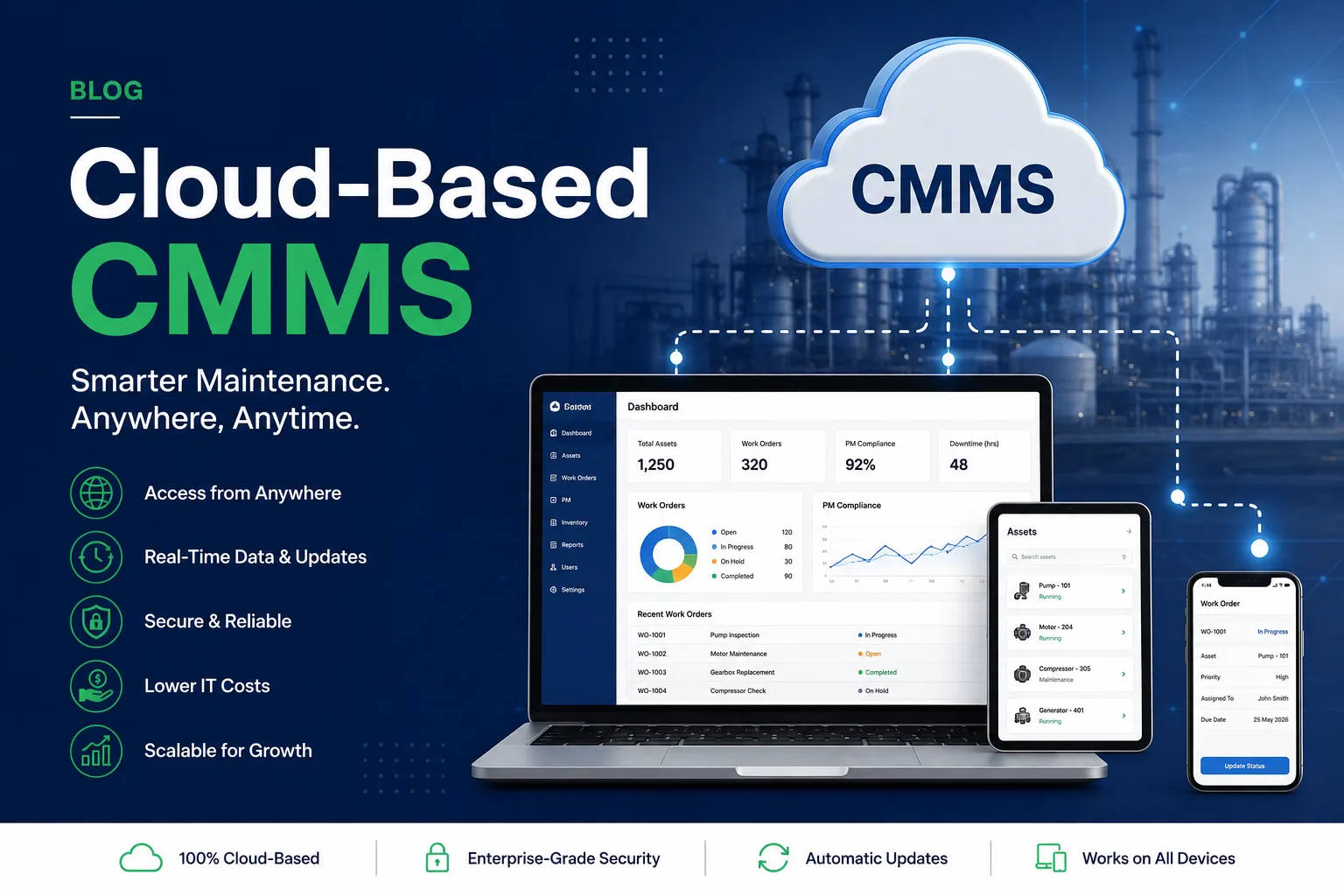
How Cloud-Based CMMS Improves Maintenance Operations
There are many benefits. Improving efficiency isn't the only goal; lowering costs and getting the most out of your investment (ROI) are also important.